



Natural vs Whey-Added Peanut Butter: The Protein and Amino Acid Advantage
Savory IndiaPeanut butter has earned its reputation as the ultimate comfort spread — creamy, nutty, and full of good fats. But in the fitness world, Protein is what truly steals the spotlight. And now, with whey-added peanut butter becoming popular, many are asking:
Is there really a difference, or is it just clever marketing?
Let’s break it down — from protein numbers to amino acid quality — so you can make a smarter scoop.
Natural Peanut Butter: Strong on Protein, Light on Aminos
Natural peanut butter is made purely from roasted peanuts, sometimes with a pinch of salt. It’s wholesome and rich, packing about 25-30 g of protein per 100 g, as seen across leading brands like Pintola, Savory, MyFitness and The Butternut Co.
However, not all protein is created equal.
While peanuts contain all 20 amino acids, research published by the National Institutes of Health (PMC, 2016) found that their amino acid profile is low in methionine, one of the essential amino acids your body can’t produce. This means peanut protein is “incomplete”, offering great overall protein but limited muscle recovery benefits on its own. (PMC, 2016)
Whey-Added Peanut Butter: A Complete Protein Powerhouse
Now, when whey enters the jar, things get interesting.
Whey protein, derived from milk, is known as a complete protein because it contains all nine essential amino acids — including leucine, isoleucine, and valine (the BCAAs crucial for muscle growth and repair).
According to Healthline (2024), whey protein is among the highest-quality proteins available, boasting excellent digestibility and a perfect amino acid score of 1.0 — meaning it provides everything your muscles need for recovery. (Healthline, 2024)
When blended with peanuts, this gives you the best of both worlds:
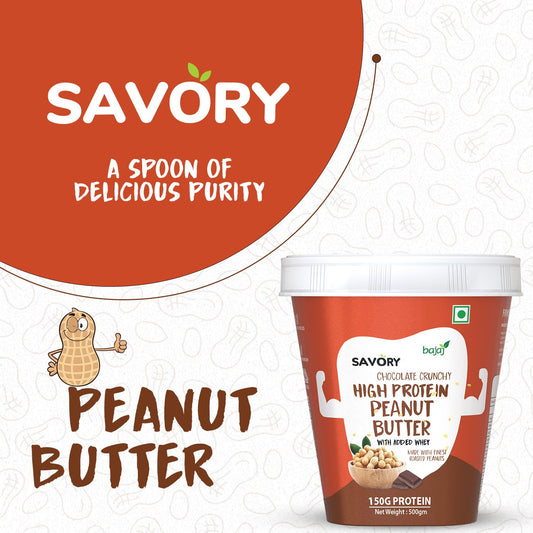
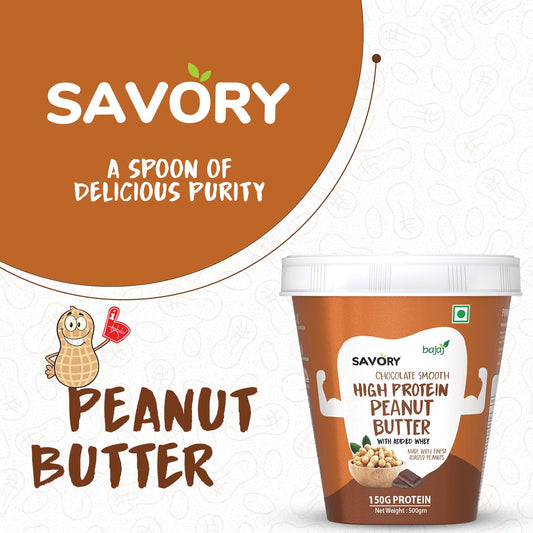
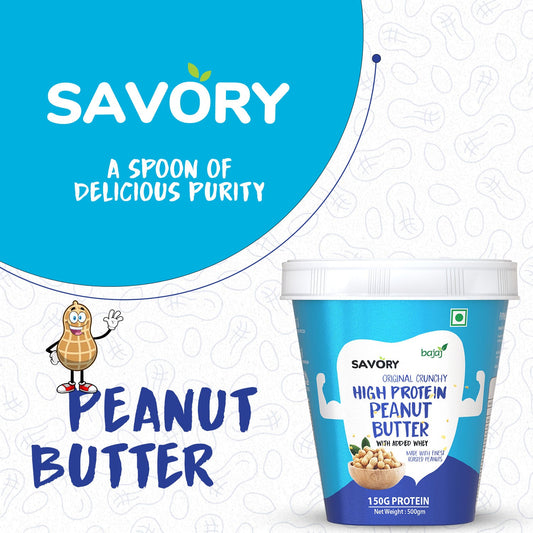
- Higher total protein — typically 30–35 g per 100 g (Brands such as MuscleBlaze, Savory, Endura, and Saffola offer whey protein peanut butter products that fall within this range.).
- Better protein quality — a complete amino acid profile for better absorption, muscle synthesis, and satiety.
As Medical News Today (2023) explains, “Whey protein supplementation has been shown to enhance muscle protein synthesis and support lean body mass growth when consumed post-workout.” (Medical News Today, 2023)
Choosing Protein Quality over Quantity
While both peanut butters give you a solid dose of protein, the difference lies in bioavailability — how well your body can actually use that protein.
- Natural peanut butter = Plant-based, incomplete protein, rich in healthy fats and fiber.
- Whey-added peanut butter = Complete protein, highly bioavailable, and ideal for muscle recovery, fat metabolism, and post-workout nutrition.
As Tandfonline (2018) highlights, “Fortifying foods with whey derivatives significantly improves protein quality, amino acid balance, and nutritional functionality.” (Tandfonline, 2018)
🧾 Protein & Amino Acid Comparison (per 100 g)
|
Type of Peanut Butter |
Total Protein (Per 100g) |
Amino Acid Profile |
Protein Quality Score |
Ideal For |
|
Natural Peanut Butter |
25–30 g |
Incomplete (Low Methionine) |
~0.7 (PDCAAS*) |
Everyday snacking, plant-based diets |
|
Whey-Added Peanut Butter |
33–35 g |
Complete (All 9 Essential AAs) |
1.0 (PDCAAS*) |
Muscle recovery, fitness & post-workout nutrition |
*PDCAAS = Protein Digestibility-Corrected Amino Acid Score — measures how well the body can use the protein.
🥄 The Final Scoop
So yes — whey-added peanut butter does more than just bump up your protein count. It upgrades the quality of that protein, giving your body access to the full spectrum of amino acids it needs to recover, rebuild, and perform better.
If you’re chasing fitness goals, the whey blend makes sense. But if you love simplicity and plant-based nutrition, Natural peanut butter is still an incredible everyday spread.
Either way, peanut butter remains one of the tastiest ways to stay fueled, reminding us that good health and great taste can go hand in hand.
- Written by Pranav Narvekar